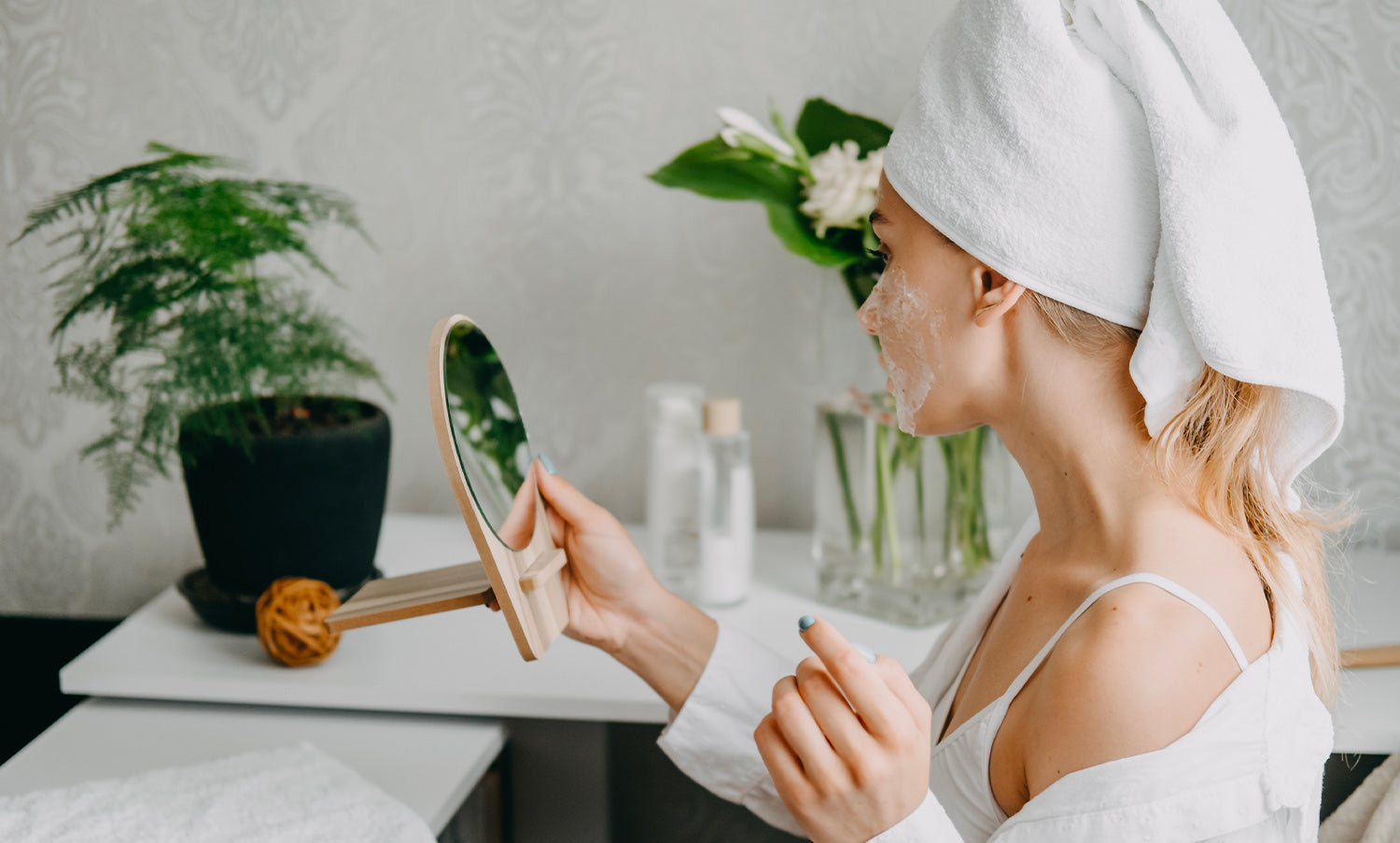
All Our Tips for Applying Your Skincare Correctly
With the huge variety of cosmetic products available, it is not always easy to find your way around. Even for makeup removal alone, you have to choose between a milk, an oil or a lotion. And what is even less obvious for many of us: knowing in which order and at what time to apply our skincare.
Even if there is a “standard” routine, it should be adjusted depending on the skin concern you want to target (blemishes, dehydration, sensitivity, redness, dark circles, etc.) as well as the season. These nuances are essential to get the best results from your routine — while still enjoying the ritual, of course.
Finally, it’s important to know that the skin’s cellular activity is not the same during the day — when it defends itself against external aggressors — as it is at night, when it repairs after being exposed. Needs also change with age and with the seasons, which is why different products may be required for an effective ritual.
In this article, we share all the keys to determine, understand and master your skincare routine — and get the maximum benefits from it.
1. What Is a Skincare Ritual and What Are the Benefits?
A skincare ritual helps maintain healthy skin — the body’s first protective barrier — preserve it from skin concerns and fight premature aging. It consists of a structured daily application of different products:
Makeup remover
Removes all types of makeup (foundation, blush, eyeshadow, mascara, lipstick, etc.), including mascara, so that lashes can be naturally nourished by the sebum the skin produces. This is a crucial first step for the skin’s nighttime repair and oxygenation.
There is nothing better than an oil to fully dissolve all types of makeup and excess sebum. It deeply unclogs pores, supports tissue oxygenation and improves the absorption of nighttime skincare. A makeup remover can also take the form of a milk or a lotion — but a lotion will not remove makeup thoroughly unless it is very light.
Cleanser
Removes oily residue from makeup-removing oil and eliminates impurities, dead skin cells (more than one million per day) from the surface, sweat, dust, pollution and all buildup accumulated throughout the day. Removing these is essential: otherwise they clog pores, create a dull film, reduce oxygenation and can lead to dullness, inflammation, oxidation, acne breakouts, comedones and redness. A cleanser can be a lotion, gel, foam, soap bar or powder.
Lotion
Soothes and/or tones and prepares the skin for the rest of the routine. Lotions may be targeted or multi-action (like ours). Beyond its primary function, it should not dry out the skin and should help rebalance pH, nourish and strengthen the microbiome.
Eye care
At minimum, hydrates and protects this exposed and very sensitive area, and can help address puffiness and dark circles.
Serum
A treatment that is more concentrated in actives to address a specific skin concern — and an essential complement as we age.
Cream
At minimum, hydrates, and can also address specific needs depending on skin type and age.
Sunscreen
Essential to protect the skin from UV when exposed to the sun. This is the everyday foundation — necessary, but not always sufficient. As we age, when addressing specific concerns, or depending on the season, it becomes crucial to add complementary products such as exfoliators and masks, at a lower frequency (1–2 times per week depending on skin type). Let’s clarify their roles:
Exfoliator
Stimulates and accelerates the skin’s natural renewal process. It clears pores and removes surface cellular debris, revealing “new” skin with a much better ability to absorb skincare. As a result, a mask is far better absorbed when preceded by exfoliation.
Mask
Targets a specific concern such as lack of glow, dehydration, loss of firmness, etc. It becomes especially useful after menopause, when the skin needs more targeted support than ever.
However, even if the primary goal of a skincare ritual is to maintain healthy, radiant skin, it is equally important that it remains a moment to take time for yourself — to enjoy massaging the skin and giving yourself a true well-being pause. As you know, we are the apothecary of the senses.
2. How to Adapt Skincare to Your Skin Concerns?
The “standard” routine described above is the foundation. But depending on the concern you want to address, there are specific points to know.
A. Depending on your concern
You won’t use exactly the same products if your skin is normal, dry, dehydrated or oily. This is also a good opportunity to highlight the often-misunderstood difference between dry and dehydrated skin:
-
Dehydrated skin lacks water and needs hydrating, plumping care.
-
Dry skin lacks lipids and needs nourishment through rich, nutritive care (often oil-based).
If you have sensitive skin, gentle makeup removal and cleansing are essential. You may also use your hands — far gentler than cotton pads — to remove makeup and cleanse.
Below are recommended routines depending on your concern:
Blemish-prone skin
Characterized by pimples, blackheads, dark marks, enlarged pores or acne. These skins need daily cleansing and purification, for instance with a lotion. Weekly use of a mask and exfoliator is also recommended. Discover our blemish routine here.
Dull, low-glow skin
If your complexion looks dull, cleansing is key to remove impurities that “steal” light from the face. To restore glow and plumpness, it is also important to re-energize the skin through exfoliation to stimulate cellular metabolism. Discover our glow routine here.
Dehydration and tightness
Do you feel tightness after the shower and the urge to apply cream immediately? Your skin may be dehydrated — lacking water. To help, hydrate with a gentle cleanser, a rebalancing lotion, a serum and a cream. Weekly exfoliation followed by cream is also recommended, as exfoliation amplifies the effect of skincare. Find all our tips here.
Wrinkles and loss of firmness
With age, skin gradually shows fine lines and wrinkles and loses suppleness. To reduce signs of time and bring back radiance, nothing beats a good serum that targets these concerns. An antioxidant cream is also essential. Exfoliate and apply a mask weekly. Want to discover our well-aging routine? Click here.
Sensitive skin and redness
If your skin feels irritated and shows redness, it is essential to soothe with a lotion and hydrate with a serum and a hydrating cream. Discover our tips here.
Dark circles and puffiness
If the eye contour shows dark circles, puffiness or fine lines, applying an eye product twice daily is essential. You can also add cooling patches to decongest and refresh this very sensitive area. Visit our website to discover the correct gesture for the eye area.
B. Depending on age
Over time, skin gradually loses firmness and radiance. Around the age of 50, the adult body has only about 50% of the hyaluronic acid and around 70% of the collagen compared to childhood. Dehydration, loss of firmness and accelerated cellular aging therefore become additional concerns to address beyond the daily routine.
Other imperfections may also appear with age: enlarged pores, a complexion that becomes dull through progressive protein oxidation, redness that settles in, dark circles that become more pigmented… Masks and serums become essential to energize cellular metabolism, boost firmness and support skin regeneration.
C. Depending on the season
Skin needs can evolve with the seasons. While it is important to maintain a complete ritual all year long, you can adapt textures to the season — choosing lighter textures in summer, and richer ones in winter. However, do not skip moisturizer in summer: even if tightness feels less common than in winter, the skin still dehydrates and needs hydration.
Also avoid exfoliating during periods when the skin is exposed to the sun. Under UV exposure, the skin deploys an ingenious defense system and thickens to protect itself from harmful radiation that oxidizes cells and damages DNA. Therefore, you should never exfoliate as sun exposure approaches and during periods of sun exposure, so as not to disrupt and weaken this defense system.
You may exfoliate in the morning or evening (evening is preferable). If you exfoliate in the morning, avoid sun exposure afterward.
D. Which routine before going out?
Here is an excellent way to boost glow before an evening out.
Start by applying our exfoliator, massage, leave on for 5 minutes, then rinse. Next apply our energizing glow mask on damp skin. With your thumb and index finger slightly wet, perform Jacquet pinching, then massage to boost the mask’s effect. Once rinsed, soak a cotton pad with our multi-action lotion and gently press under the eyes to help decongest and refresh the gaze. Finish with your eye care, serum and cream.
If you have any other questions about skincare rituals or would like a personalized recommendation, book a consultation here.