Neurocosmetics: When the Skin Speaks to the Brain
Today, the concept of holistic beauty — derived from the Greek word “holo”, meaning “whole” — is firmly established. It reflects a comprehensive approach that encompasses physical, mental, emotional and spiritual well-being. Beyond skincare rituals alone, holistic beauty encourages caring for oneself and one’s skin through sleep, nutrition, overall health, regular physical activity and lifestyle choices, fostering harmonious balance between body and mind.
Dietary supplements were among the first expressions of this approach, quickly followed by the rise of yoga retreats, meditation practices, breathing techniques, and more.
This awareness of the impact of our emotions — particularly on the appearance of the skin — is not new. We all know that sadness often shows as dull skin, while happiness brings a radiant glow. It is now widely accepted that eczema can manifest anxiety, psoriasis may reflect inner anger, and acne can accompany periods of grief or intense stress.
Scientific research has gone even further, providing evidence of a direct and close link between the skin and the brain. Even more remarkably, it has been demonstrated that certain cosmetic ingredients can have a real impact on emotional well-being. This is how neurocosmetics was born — a recent discipline that studies how cosmetic products act on the skin’s nervous system (part of the peripheral nervous system) and, beyond that, on our emotional well-being. Let’s explore what this means.
1. What Is the Foundation of Neurocosmetics?
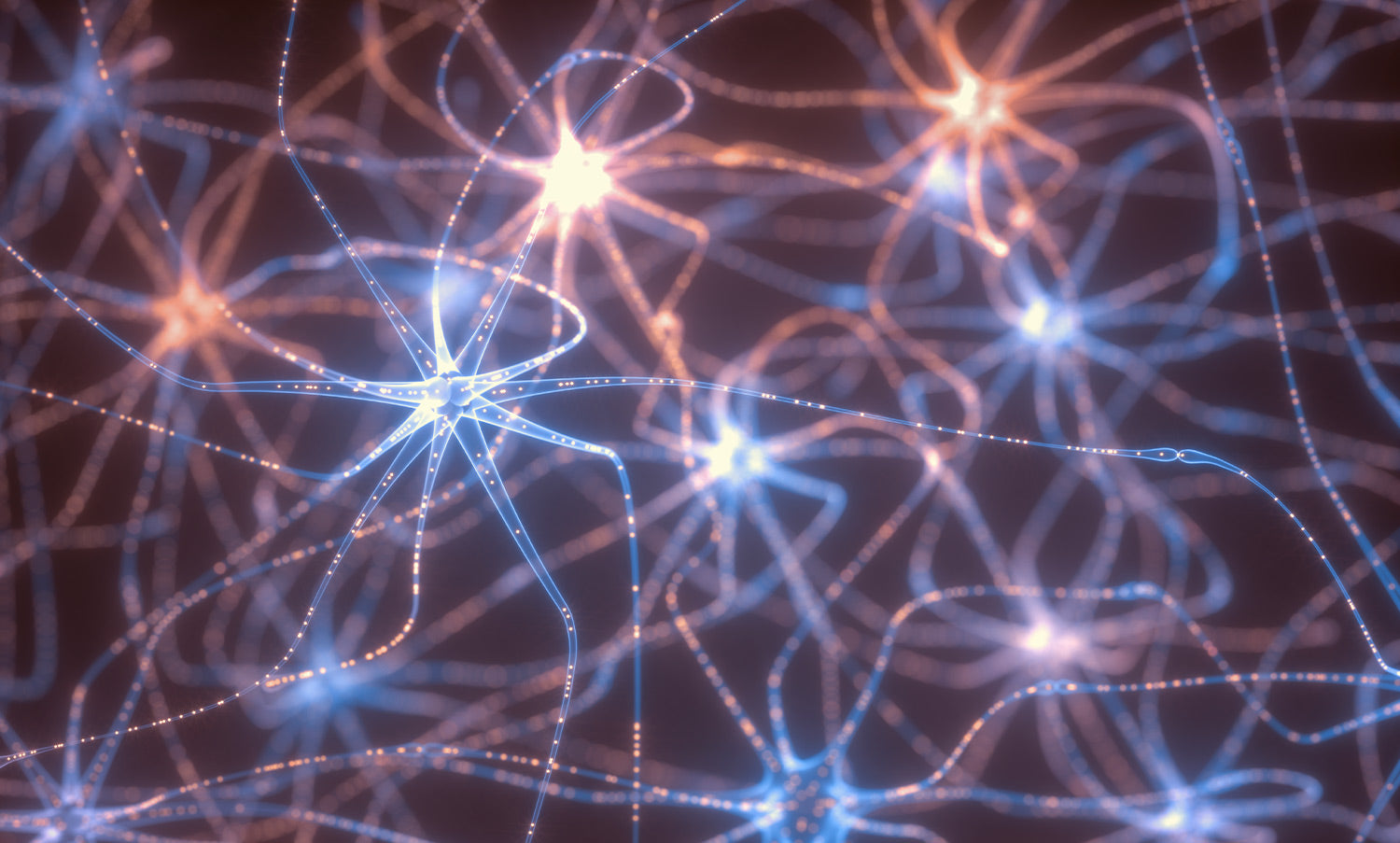
Neurocosmetics is based on the fact that brain cells and skin cells communicate closely through nerve connections. These intra-epidermal nerve fibers secrete peptide and non-peptide neurotransmitters — also known as neuromediators — such as neuropeptide Substance P, neuropeptide Y, endorphins, and others.
These are chemical messengers that influence skin cells and their functions. Skin cells themselves are also capable of synthesizing and releasing neurotransmitters. As a result, certain cosmetic ingredients can, for example, stimulate the secretion of endorphins — peptides released by neurons — helping relax facial muscles and smooth wrinkles. These are known as neurocosmetic ingredients.
More broadly, neurocosmetic ingredients act by selectively stimulating neuromediators to achieve targeted results such as enhanced radiance, wrinkle reduction, stimulation of hyaluronic acid production, improved barrier function, reduced imperfections, or decreased inflammation.
2. Pathways of Action of Neurocosmetic Ingredients
Neurocosmetic ingredients can address multiple skin concerns. Today, the most common applications focus on combating inflammation and, more generally, skin aging. Rather than listing them exhaustively, let’s look at a few examples to better understand their mechanisms of action.
2.1. Neuro-Destressing and Neuro-Relaxing Ingredients
In modern life, our bodies are subjected to daily stress (pollution, UV exposure, lack of sleep, emotional tension, etc.), which disrupts physiological balance. When exposure to these stressors is significant, skin cells continuously produce cortisol, leading to inflammation and a tired-looking complexion.
Because the skin and brain share a common origin, they communicate to coordinate “danger” signals. Skin cells themselves can produce cortisol under stress. Elevated cortisol levels in the skin lead to:
-
Increased blood sugar levels, promoting glycation, which damages collagen and elastin, resulting in loss of firmness and elasticity;
-
Skin dryness due to reduced hyaluronic acid production combined with increased trans-epidermal water loss;
-
Increased appearance of fine lines and wrinkles;
-
Impaired barrier function and disrupted epidermal cohesion.
Neurocosmetic ingredients have been developed to block the enzymes responsible for these harmful effects of cortisol.
Conversely, while stress negatively affects the skin, positive touch — such as massage or affectionate contact — can trigger the release of neurotransmitters that generate feelings of comfort and protection. Endorphins, through their connection to the brain’s pleasure centers, bind to endorphin receptors in the epidermis and enhance cellular regeneration, skin vitality and wound healing. This has opened promising research avenues for treating skin conditions such as atopic dermatitis and psoriasis.
Some neurocosmetic ingredients also help relieve symptoms of sensitive skin (tightness, tingling, burning sensations, itching, discomfort) by acting via nerve fibers on the release of neuromediators responsible for inflammation, pain and itching.
Pigmentation concerns are also addressed through neurocosmetics, as dark spots are linked to elevated cellular stress levels. Cellular stress molecules and epidermal neuropeptides — particularly Substance P — play a role in hyperpigmentation.
Sea daffodil extract, a key active in our brightening serum "Voile Lacté", inhibits both cellular stress factors and the action of Substance P. It prevents the activation and overproduction of melanin responsible for dark spots and reduces the amount of melanin transferred to the skin’s surface. As a result, both the size and intensity of pigmentation are diminished. Our "Voile Lacté" serum is therefore a true neurocosmetic.
2.2. Neurocosmetic Ingredients for Treating Skin Aging
A distinction is made between intrinsic aging, linked to time, and extrinsic aging, related to lifestyle, disease, pollution and photoaging. Smoking, certain medications and UV exposure induce inflammatory mediators and free radical production, accelerating skin aging.
Over time, significant anatomical and physiological changes occur in the skin: progressive thinning, loss of elasticity and tone, and often the appearance of dyschromia and pigmentation spots.
When neuronal cells undergo aging — known as neuro-aging — the messengers released by neurons affect fibroblast viability, leading to skin aging. Neuro-aging therefore promotes fibro-aging. Aging neurons disrupt communication between nerves and fibroblasts, reducing the vitality of collagen, elastin and fibroblasts.
In response, neurocosmetic actives have been developed to target aging nerve endings and restore healthy communication between nerves and fibroblasts, reactivating collagen and elastin synthesis and regenerating dermal cells weakened by “aging messengers.”
Other neurocosmetic actives have been designed to enhance cellular communication via neuropeptides, increasing the ability of nerve cells to inhibit cortisol’s effects.
Thanks to neurotransmitters, a variety of neurocosmetic ingredients have also been developed that function similarly to Botox, with proven efficacy.
In conclusion, neurocosmetics is not limited to skincare alone — it is also a holistic approach. Beyond products formulated with neurocosmetic ingredients, neuromediators can also be stimulated through massage, acupressure, relaxation techniques, meditation and breathing exercises.